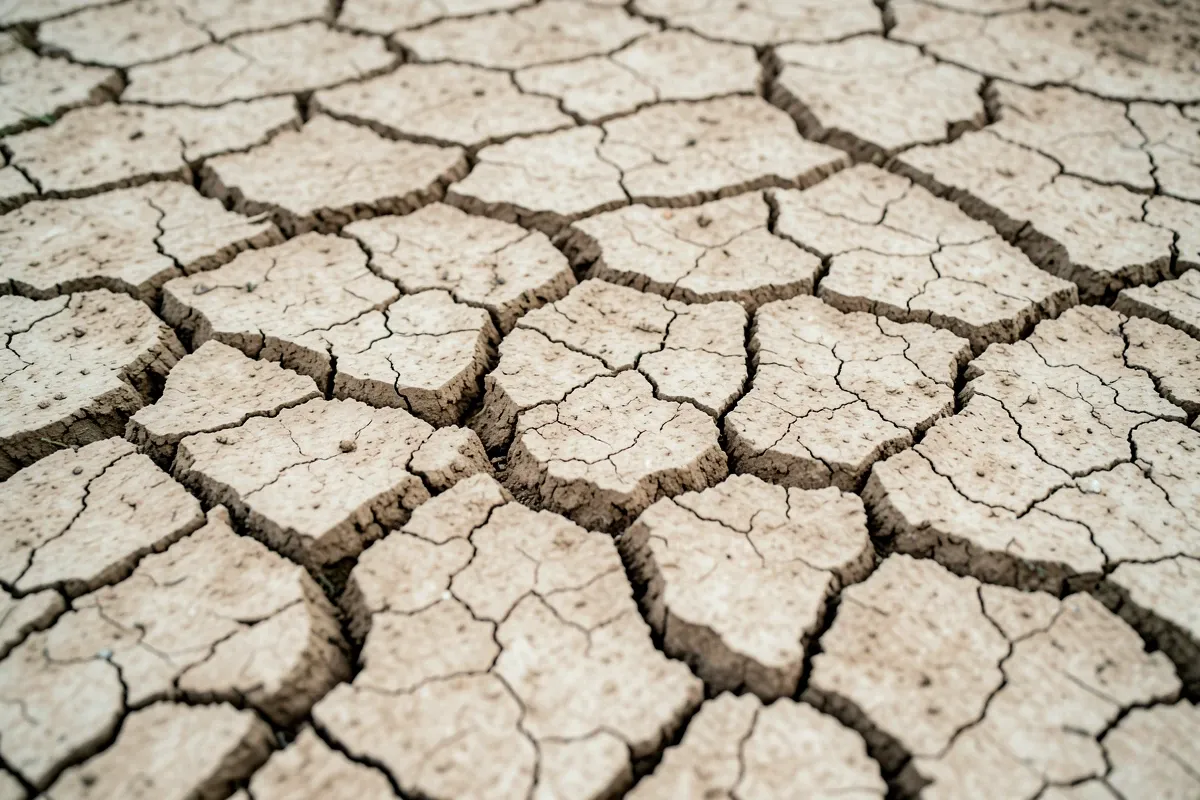
What expansive clay is
Clay is made of extremely fine, flat particles. Some clays, called expansive clays, soak up water and swell, then shrink as they dry. The swing can be large enough to lift a slab, push on foundation walls, or open cracks in the ground you can fit a finger into.
What does expansive clay soil look like?
Sticky, slick mud that clings to boots when wet. Hard, pale ground with a web of wide cracks when dry. Water that sits in low spots for a day or more after rain.
Clay soil drainage issues
- Water sits on top. Clay absorbs water slowly, so rain runs off or pools instead of soaking in.
- Low spots become ponds. Lawns, side yards and the strip next to the house collect water. Fixes for standing water →
- Water finds the house. If the ground slopes toward the foundation, rain and roof water collect against it, soak the clay there, and make it swell more on that side than the others.
- Crawl spaces get wet. Water that can’t sink in moves sideways, often into the crawl space. Crawl space water →
What it can do to a house
The damage comes from uneven moisture. When one side of a house sits in wet, swollen clay and another sits in dry, shrunken clay, the foundation gets pushed and pulled in different directions. Signs include:
- cracks in the foundation, driveway or patio
- doors and windows that stick or won’t latch
- gaps between walls and ceilings or around window frames
- sloping floors
Homes built before about 1945 are more prone to cracking because their concrete often has no steel reinforcement. Cracks wider than 1/8 inch, horizontal cracks and diagonal cracks are worth having checked. More on foundation cracks →
Clay soil drainage solutions
The goal is simple: keep water from collecting next to the house, and keep moisture around the foundation as even as you can through the year.
- Start with the roof. Clean gutters and extend downspouts so roof water lands well away from the house. This is the cheapest fix and often the biggest one. Downspouts and grading →
- Fix the slope. Ground next to the house should fall away from it. The California Residential Code (R401.3) calls for the ground to fall at least 6 inches in the first 10 feet. Where the lot can’t allow that, drains or swales take its place.
- Collect and carry water away. A French drain or surface drain collects water and pipes it to a legal outlet. In clay, the drain has to carry the water away, because the ground won’t absorb much of it.
- Be careful with dry wells. A dry well relies on the soil absorbing water. Clay absorbs slowly, so ask for a percolation test before putting one in clay. It may not keep up.
- Water in summer, a little. Steady, light watering near the foundation in a dry summer can limit shrinkage. Don’t flood it. The aim is even moisture.
Common questions
Is all of Sunnyvale on clay?
Much of Sunnyvale has clay-rich soil, and soil closer to the bay can be softer and wetter. Your soil can vary from one lot to the next, which is why contractors look at the site before quoting.
Can you fix clay soil itself?
Not practically for a whole yard. Gypsum and compost help garden beds, but they don’t change how clay behaves under a house. The practical fix is to control the water.
When is the worst time for clay soil problems?
Water problems peak in the rainy season, roughly November through March. Shrinkage cracks show up late in the dry summer.
Get a free estimate from a licensed contractor →
Sunnyvale Drainage Help is a free referral service, not a contractor. Contractors pay us for referrals. How it works · Updated 2026-10-26